Kitchen Oil Stains: A Cleaning Challenge Hidden in Culinary Smoke—How to Solve It Efficiently?
Kitchen Oil Stains:
A Cleaning Challenge Hidden in Culinary Smoke—How to Solve It Efficiently?
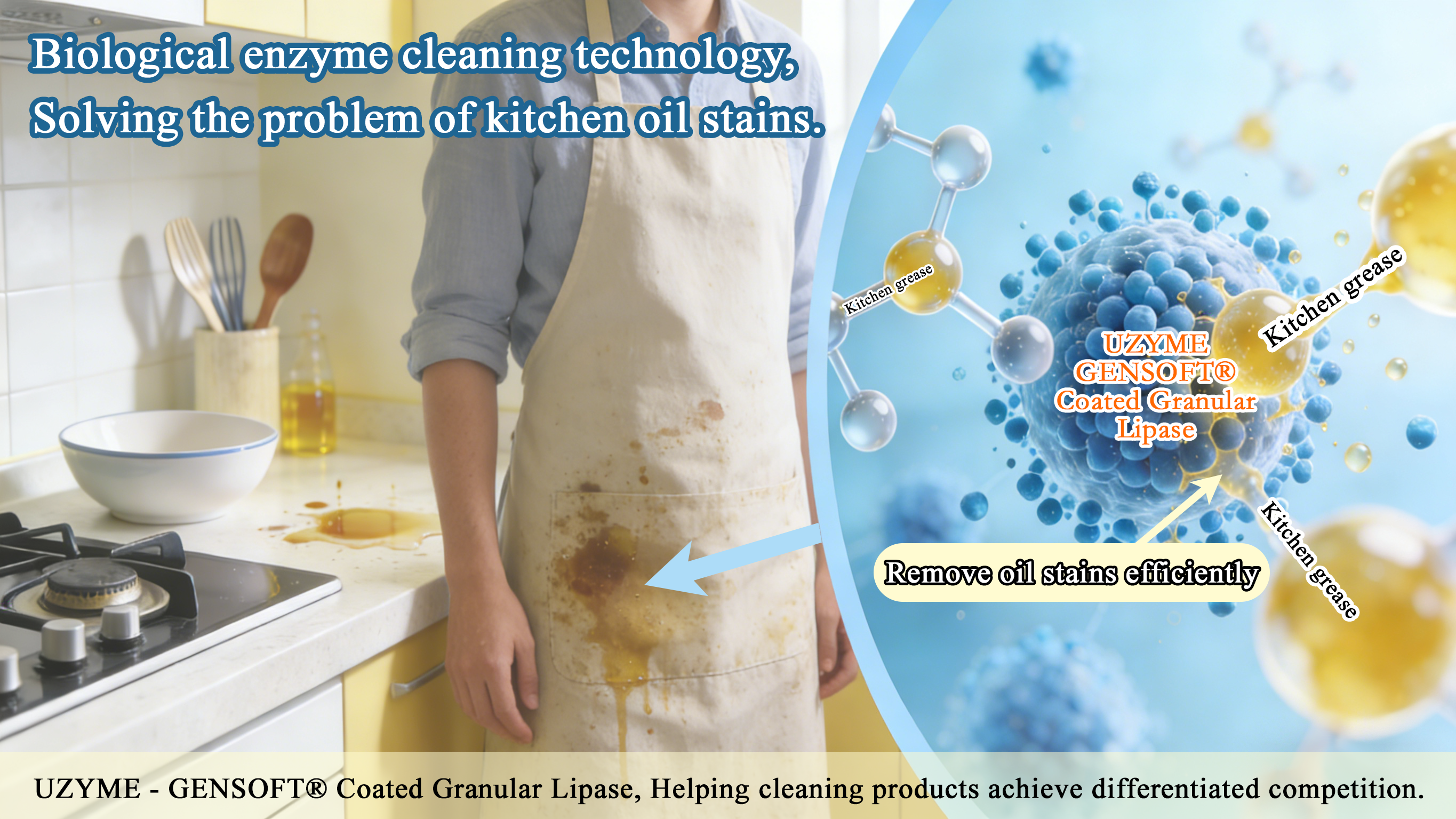
The kitchen is the heart of a home’s culinary activity, yet it is also a cleaning disaster zone. Oil splatters from frying, stir-frying and sautéing not only cling to range hoods, stovetops and wall tiles, but also penetrate deep into the fibers of chef uniforms, aprons and dishcloths, forming stubborn stains that are difficult to remove and prone to recurrence. For detergent manufacturers, solving the pain point of kitchen oil stain removal is the key breakthrough to unlock the household cleaning and catering industry laundry markets.
First, kitchen oil stains have complex compositions, not just a single type of grease. Daily kitchen oil stains are mostly mixtures of animal and vegetable oils—peanut oil and soybean oil used in stir-frying, animal fats from roasting, as well as proteins and starches from food residues. These components bind together to form an oil-dirt complex. Once dried, such stains turn from liquid to solid, adhering tightly to fabrics or hard surfaces, which ordinary detergents can barely penetrate and break down.
Second, high temperatures make oil stains adhere more tenaciously. The high heat during cooking triggers carbonization of oils; originally water-soluble oils transform into blackened, hardened stubborn grease deposits. For example, the oil stains on the collars of chef uniforms and the oil spots on the hems of aprons, after repeated high-temperature baking, seep into the fiber interior and form permanent yellow stains. Even vigorous scrubbing with a brush only removes surface oil, leaving deep-seated residues intact.
Faced with stubborn kitchen oil stains, the limitations of traditional cleaning solutions are obvious——Surfactant limitations: Surfactants in ordinary detergents can only emulsify surface oil stains, but cannot decompose deep carbonized grease, leading to frequent oil re-deposition after cleaning.To fundamentally solve the problem of kitchen oil stains, the key lies in precise targeted decomposition of oil molecules—and this is exactly the core advantage of the professional UZYME-GENSOFT® Coated Granular Lipase Preparation.
As a highly efficient biological catalyst, UZYME-GENSOFT® Coated Granular Lipase can accurately recognize oil molecules and break them down into water-soluble fatty acids and glycerol, eliminating oil stains at the source instead of just performing superficial emulsification. For carbonized grease and deep fiber oil stains, lipase can penetrate into fiber gaps and gradually decompose stubborn residues, achieving the effect of gentle oil removal without damaging fabrics.
More importantly, UZYME-GENSOFT® Coated Granular Lipase Preparation is compatible with laundry powder products for clothing cleaning. It not only meets the convenient cleaning needs of daily household use, but also adapts to the industrial batch washing scenarios of the catering industry. Detergents added with UZYME-GENSOFT® Coated Granular Lipase can easily remove stubborn grease from kitchen fabrics without high-temperature soaking or vigorous scrubbing, while protecting clothing fibers, keeping aprons and chef uniforms soft and like new after washing.
The challenge of cleaning kitchen oil stains is essentially a contest between oil molecular structure and cleaning technology. With the increasing consumer demand for cleaning efficiency and fabric care, as well as the catering industry’s pursuit of cost reduction and efficiency improvement, biological enzyme cleaning technology represented by UZYME-GENSOFT® Coated Granular Lipase is emerging as the optimal solution to tackle kitchen oil stains. For detergent manufacturers, seizing the opportunity of biological enzyme technology can help create products with stronger differentiated competitiveness, and secure a foothold in the trillion-dollar cleaning market.
#uzyme,#for detergent,#lipase,#GENSOFT®,#GENSOFT® LIP30GHS,#dishwasher,#disawash detergent